
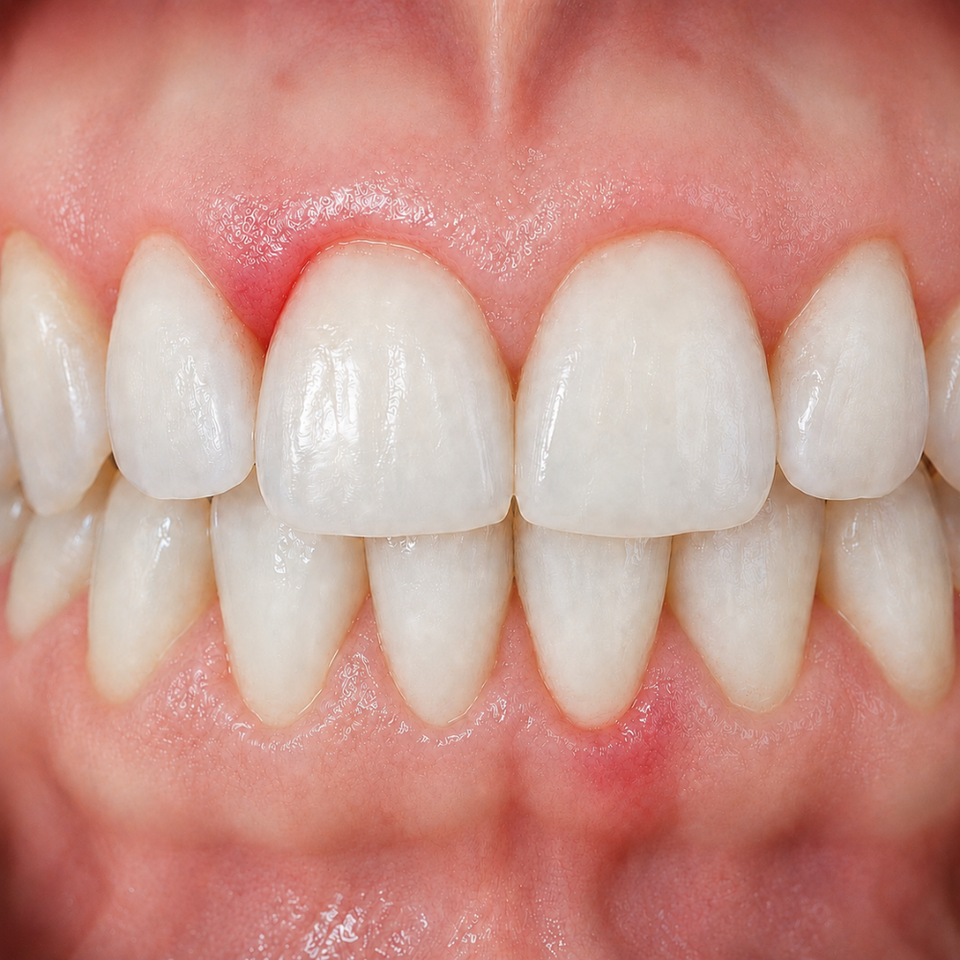
Why Are My Gums Bleeding When I Brush?
By MD Dental Growth Agency, Contributor
Reviewed by Dr. Pham, DDS, Woodburn Dental Care
Published July 17, 2026
If you notice blood in the sink when brushing or flossing, you’re not alone. Many people experience bleeding gums from time to time, but it’s important not to ignore it.
Healthy gums generally should not bleed during normal brushing and flossing. While occasional irritation can happen, persistent bleeding may be a sign of an underlying dental issue that requires attention.
At Woodburn Dental Care in Annandale, VA, one of the most common questions we hear from patients is: “Why do my gums bleed when I brush?” Let’s explore some of the most common causes and what you can do about them.
The Most Common Cause: Gingivitis
The leading cause of bleeding gums is gingivitis, the earliest stage of gum disease.
Gingivitis develops when plaque and bacteria accumulate along the gumline. Over time, this buildup irritates the gums, causing inflammation.
Common signs of gingivitis include:
Healthy gums generally should not bleed during normal brushing and flossing. While occasional irritation can happen, persistent bleeding may be a sign of an underlying dental issue that requires attention.
At Woodburn Dental Care in Annandale, VA, one of the most common questions we hear from patients is: “Why do my gums bleed when I brush?” Let’s explore some of the most common causes and what you can do about them.
The Most Common Cause: Gingivitis
The leading cause of bleeding gums is gingivitis, the earliest stage of gum disease.
Gingivitis develops when plaque and bacteria accumulate along the gumline. Over time, this buildup irritates the gums, causing inflammation.
Common signs of gingivitis include:
- Bleeding when brushing or flossing
- Red or swollen gums
- Tender gums
- Persistent bad breath
- Receding gums
The good news is that gingivitis is often reversible when caught early through professional dental cleanings and improved oral hygiene.
Are You Brushing Too Hard?
Many people assume that brushing harder means cleaning better, but the opposite is often true.
Using excessive force or a hard-bristled toothbrush can irritate delicate gum tissue and lead to bleeding.
To protect your gums:
Are You Brushing Too Hard?
Many people assume that brushing harder means cleaning better, but the opposite is often true.
Using excessive force or a hard-bristled toothbrush can irritate delicate gum tissue and lead to bleeding.
To protect your gums:
- Use a soft-bristled toothbrush.
- Brush gently using small circular motions.
- Replace your toothbrush every 3-4 months.
- Consider using an electric toothbrush with pressure sensors.
A gentle technique can effectively remove plaque while protecting your gums.
You Recently Started Flossing
If you’ve just started flossing regularly, you may notice slight bleeding for the first few days.
This often occurs because the gums are inflamed from plaque buildup between the teeth. As your gums become healthier, the bleeding typically decreases.
However, if bleeding continues for more than one to two weeks, it may indicate gum disease and should be evaluated by your dentist.
Plaque and Tartar Buildup
Even if you brush twice daily, plaque can accumulate in areas that are difficult to reach.
When plaque remains on the teeth, it hardens into tartar (calculus). Unlike plaque, tartar cannot be removed with regular brushing and flossing.
Tartar buildup along the gumline can lead to:
You Recently Started Flossing
If you’ve just started flossing regularly, you may notice slight bleeding for the first few days.
This often occurs because the gums are inflamed from plaque buildup between the teeth. As your gums become healthier, the bleeding typically decreases.
However, if bleeding continues for more than one to two weeks, it may indicate gum disease and should be evaluated by your dentist.
Plaque and Tartar Buildup
Even if you brush twice daily, plaque can accumulate in areas that are difficult to reach.
When plaque remains on the teeth, it hardens into tartar (calculus). Unlike plaque, tartar cannot be removed with regular brushing and flossing.
Tartar buildup along the gumline can lead to:
- Gum irritation
- Chronic inflammation
- Bleeding gums
- Gum disease progression
Professional dental cleanings help remove plaque and tartar before they cause more serious problems.
Gum Disease May Be Progressing
If gingivitis is left untreated, it can advance into periodontitis, a more serious form of gum disease.
Periodontitis can cause:
Gum Disease May Be Progressing
If gingivitis is left untreated, it can advance into periodontitis, a more serious form of gum disease.
Periodontitis can cause:
- Frequent bleeding gums
- Gum recession
- Bone loss around teeth
- Loose teeth
- Tooth loss
Many adults are unaware they have gum disease because symptoms often develop gradually.
Regular dental checkups allow your dentist to identify and treat gum disease before permanent damage occurs.
Certain Medical Conditions and Medications
In some cases, bleeding gums may be linked to health conditions or medications.
Examples include:
Regular dental checkups allow your dentist to identify and treat gum disease before permanent damage occurs.
Certain Medical Conditions and Medications
In some cases, bleeding gums may be linked to health conditions or medications.
Examples include:
- Diabetes
- Hormonal changes during pregnancy
- Vitamin deficiencies
- Blood-thinning medications
- Certain immune system disorders
If you have ongoing gum bleeding despite good oral hygiene, be sure to discuss your medical history and medications with your dentist.
When Should You See a Dentist?
You should schedule a dental appointment if:
When Should You See a Dentist?
You should schedule a dental appointment if:
- Your gums bleed regularly when brushing or flossing.
- Your gums appear swollen or red.
- You have persistent bad breath.
- You notice gum recession.
- Your teeth feel loose.
- Bleeding continues for more than two weeks.
Early treatment is typically simpler, more comfortable, and more affordable than waiting until symptoms worsen.
How Woodburn Dental Care Can Help
At Woodburn Dental Care, we help patients identify the cause of bleeding gums and create personalized treatment plans to restore gum health.
Depending on your needs, treatment may include:
How Woodburn Dental Care Can Help
At Woodburn Dental Care, we help patients identify the cause of bleeding gums and create personalized treatment plans to restore gum health.
Depending on your needs, treatment may include:
- Professional dental cleanings
- Deep cleaning (scaling and root planing)
- Personalized oral hygiene recommendations
- Periodontal evaluations
- Ongoing preventive care
Our goal is to help you maintain healthy gums and a confident smile for years to come.
Tips for Healthier Gums
To reduce the risk of bleeding gums:
Tips for Healthier Gums
To reduce the risk of bleeding gums:
- Brush twice daily with fluoride toothpaste.
- Floss every day.
- Use a soft-bristled toothbrush.
- Attend regular dental cleanings and exams.
- Avoid tobacco products.
- Maintain a healthy diet rich in vitamins and minerals.
Small daily habits can make a big difference in your long-term oral health.
Concerned About Bleeding Gums?
Bleeding gums are often your body’s way of signaling that something needs attention. The sooner the cause is identified, the easier it is to prevent more serious dental problems.
Concerned About Bleeding Gums?
Bleeding gums are often your body’s way of signaling that something needs attention. The sooner the cause is identified, the easier it is to prevent more serious dental problems.
If you’re experiencing bleeding gums, the team at Woodburn Dental Care in Annandale, VA is here to help.
Schedule an appointment today and let us help you achieve healthier gums and a healthier smile.
Schedule an appointment today and let us help you achieve healthier gums and a healthier smile.